Hemp-Derived CBD in Canada: What’s Actually Legal in 2026
In Canada, hemp-derived CBD products fall under the same legal framework as marijuana-derived CBD: both are regulated as cannabis under the Cannabis Act, and the source plant makes no difference to your legal obligations or protections. This surprises many Canadians who assume that “hemp” offers a regulatory loophole or that products marketed as hemp CBD can be purchased without restriction. The reality is simpler and more uniform than online forums suggest.
Whether you visit Exhale Wellness or browse a licensed Canadian retailer, any CBD product containing more than trace amounts of THC must be sold through provincially authorized channels. Health Canada treats all cannabis plants, hemp or otherwise, as controlled substances when their derivatives are intended for human consumption. The distinction between hemp and marijuana is botanical and agricultural, not legal when it comes to CBD oil, edibles, or topicals.
This confusion stems partly from U.S. influence, where the 2018 Farm Bill created a separate category for hemp-derived CBD. Canadian law took a different path in 2018, consolidating all cannabis regulation under a single act that prioritizes product safety, potency testing, and age restrictions over plant lineage. For patients, healthcare providers, and anyone considering CBD for therapeutic use, understanding this unified framework is essential to staying compliant, avoiding cross-border issues, and making informed purchasing decisions.
This article clarifies what the Cannabis Act actually says about CBD, debunks persistent myths about hemp’s special status, and provides practical guidance on where and how to buy legal products in 2026.
Understanding Hemp-Derived CBD Under Canadian Law
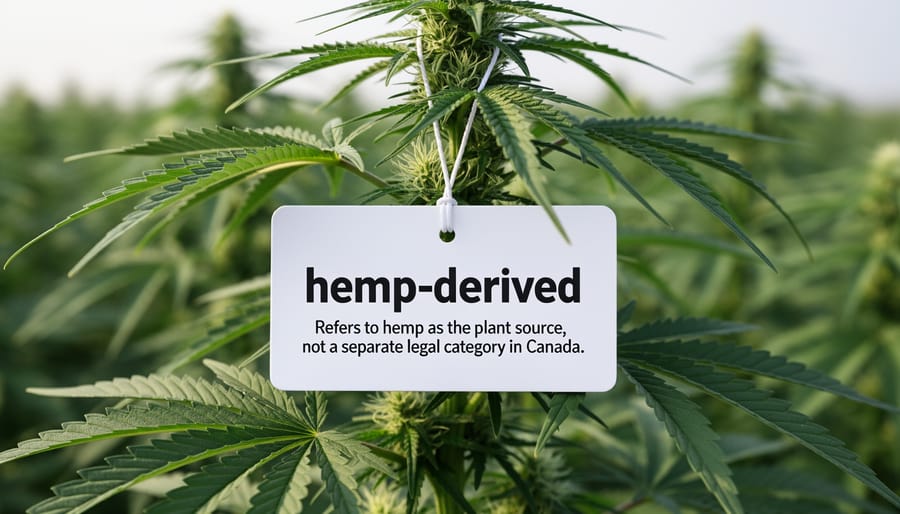
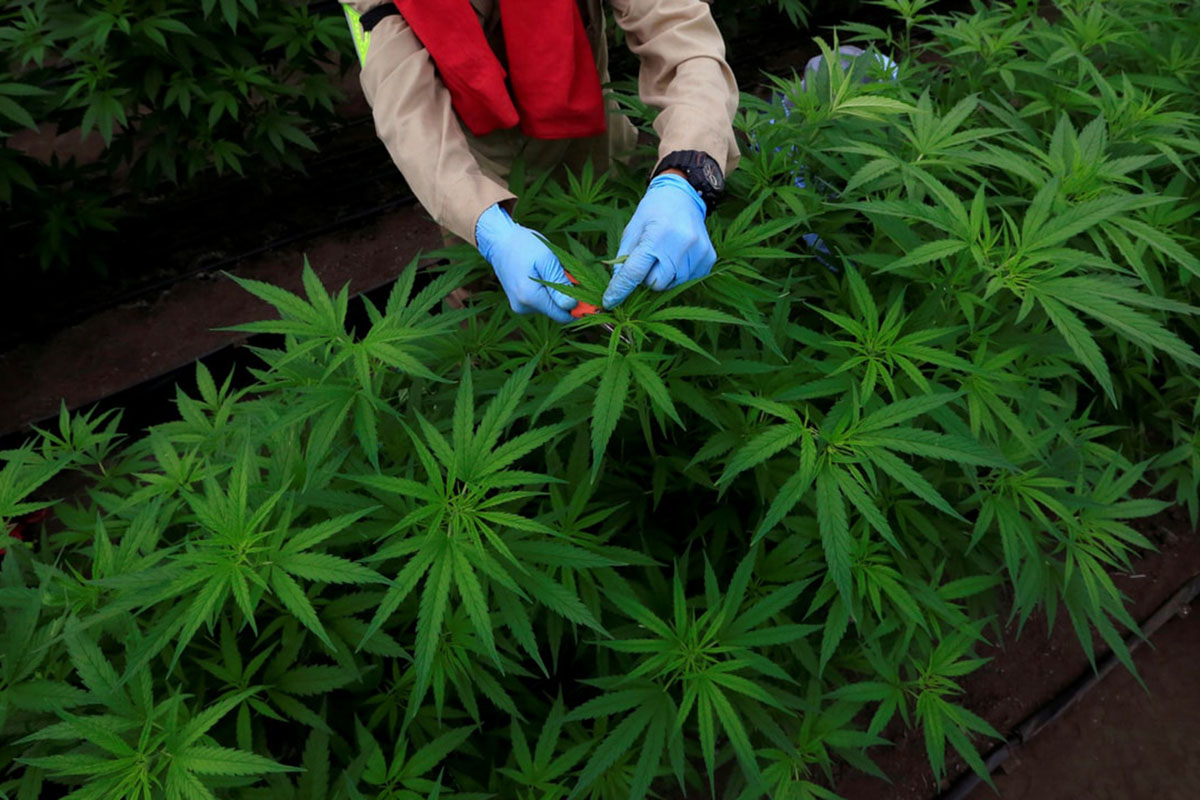
Hemp-derived CBD comes from industrial hemp plants, which are scientifically the same species as marijuana but are typically cultivated for fibre, seeds, and CBD content rather than high THC levels. Many Canadians assume products labelled “hemp-derived” exist in a legal grey area separate from marijuana, but this distinction holds no weight under Canadian law. The Cannabis Act treats all phytocannabinoids the same way regardless of which variety of Cannabis sativa they come from.
To understand why source doesn’t matter, you need to grasp what CBD is at a chemical level. CBD (cannabidiol) is one of dozens of cannabinoids explained as naturally occurring compounds in cannabis plants. Whether extracted from a hemp plant with 0.1% THC or a marijuana plant with 20% THC, the CBD molecule itself is identical. Health Canada’s position reflects this scientific reality: CBD regulated under Cannabis Act applies to all CBD products containing phytocannabinoids, with no exemptions for hemp-derived sources.
This unified regulatory approach means that CBD oil extracted from hemp plants requires the same licensing, testing, packaging, and distribution oversight as CBD extracted from traditional marijuana strains. The THC concentration in the source plant is irrelevant to how the final CBD product is classified. Under the Cannabis Act, many activities with phytocannabinoids, CBD included, remain prohibited except for specific cases where proper authorization exists through Canada’s regulated cannabis framework.
The Cannabis Act: How CBD Products Are Regulated
Who Can Legally Sell CBD in Canada
Only businesses holding the appropriate federal licenses under the Cannabis Act can legally sell CBD products in Canada. This requirement applies regardless of whether the CBD comes from hemp or marijuana plants, the source doesn’t matter under federal law.
To sell CBD to consumers, a business must obtain a licence from Health Canada. Provincial and territorial cannabis retailers, both physical storefronts and authorized online stores, hold retail licences that permit them to sell cannabis products to the general public. These are the only legal channels for purchasing recreational CBD products in Canada.
For medical cannabis access, patients must obtain products through the federal medical cannabis program. Licensed producers with cultivation and processing licences can sell directly to registered medical patients or supply provincial retailers and federally licensed online platforms.
Health food stores, wellness shops, convenience stores, and unauthorized online retailers cannot legally sell CBD products, even if they’re labeled as “hemp-derived,” “hemp extract,” or “non-psychoactive.” CBD only legal under Act compliance, which means the product must move through licensed channels from production to sale.
Selling CBD outside these regulated channels constitutes a criminal offence under the Cannabis Act. The penalties exist because unregulated products may contain undisclosed THC levels, contaminants, or inaccurate CBD concentrations. The licensing system ensures quality control, proper labelling, and child-resistant packaging requirements are met.
Recent Labelling Changes for Cannabis Products
In early 2025, Health Canada implemented a significant regulatory change that affects how cannabis products, including CBD, display potency information. The Removed actual THC/CBD labeling requirement means manufacturers no longer need to include the tested amounts of these cannabinoids on product packaging. Instead, labels now show only ranges or maximum potential levels based on the plant strain, not what’s actually in your specific package.
This shift creates a transparency problem for consumers. Previously, you could see the exact milligrams of CBD in your oil or capsule, helping you dose accurately and compare products. Now you’re working with estimates that may differ substantially from what you’re actually consuming. The change particularly affects medical users who rely on consistent dosing.
Health Canada’s rationale centers on reducing testing costs and regulatory burden for producers, but it transfers uncertainty to buyers. When purchasing CBD products from authorized retailers, ask about batch testing results or certificates of analysis if precise potency matters for your needs. Some licensed producers voluntarily share this information despite no longer being required to print it on labels.
Common Misconceptions About Hemp-Derived CBD Legality
Many Canadians hold incorrect beliefs about hemp-derived CBD’s legal status, often fuelled by overseas marketing claims or misunderstandings about industrial hemp regulations. These misconceptions can lead to unwitting legal violations and purchases from unauthorized sources.
The most pervasive myth is that hemp-derived CBD enjoys a separate, more permissive legal framework than marijuana-derived products. In reality, Canadian law makes no distinction based on plant source, all phytocannabinoids fall under Cannabis Act regulation. Whether extracted from industrial hemp or cannabis cultivars, CBD products must comply with the same licensing, distribution, and sale requirements.
| Common Myth | Legal Reality in Canada |
|---|---|
| Hemp CBD is legal without restrictions | All CBD products require Cannabis Act compliance regardless of source |
| Health food stores can sell hemp CBD | Only licensed cannabis retailers and medical channels can legally sell CBD |
| Low-THC products are automatically legal | THC content doesn’t determine legality, authorization and licensing do |
| I can order CBD online from any retailer | Legal online sales only through provincially authorized retailers |
Another widespread misunderstanding centres on THC content. Many believe that products containing minimal or no THC fall outside cannabis regulations. This isn’t accurate. The Cannabis Act regulates phytocannabinoids themselves, not just psychoactive compounds. Even products marketed as “THC-free” or “CBD isolate” remain subject to the Act’s provisions.
The belief that health food stores, wellness shops, or unregulated online retailers can legally sell hemp CBD persists despite clear enforcement. These outlets lack the required licenses, making any CBD sales from them illegal. This confusion extends to CBD edibles legality where products sold outside authorized channels violate federal law regardless of how they’re marketed.
These misconceptions often stem from observing other jurisdictions where hemp-derived CBD occupies a legal grey zone or enjoys explicit exemptions. Canada’s approach is fundamentally different, maintaining a comprehensive regulatory framework that captures all cannabis derivatives under a single system.
Traveling With CBD: Border Rules and Prescription Exceptions
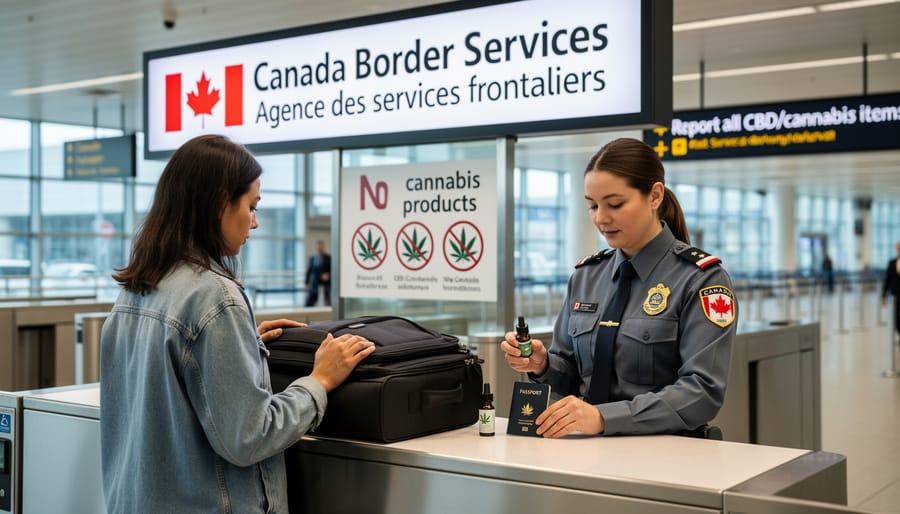
Canada’s border rules for cannabis are absolute: it is illegal to cross the Canadian border with any cannabis product including CBD, whether you’re entering or leaving the country. This prohibition applies regardless of quantity, THC content, or whether the product is hemp-derived. You cannot bring CBD oil, capsules, topicals, or any other form across the border, even if it’s legal in your destination or purchased legally in Canada.
The prohibition extends to all cannabis-containing products without exception for over-the-counter items. Many travellers mistakenly assume that low-THC CBD products fall outside this rule, but they don’t. Border officers have the authority to search, seize, and lay charges for cannabis possession at crossings, and ignorance of the law isn’t a defence.
There is one narrow exception: prescription medications that contain cannabis and have received market authorization from Health Canada. Specifically, drugs like Epidiolex (for certain epilepsy conditions) and Sativex (for multiple sclerosis spasticity) qualify for a travel class exemption. If you have a legitimate prescription for these medications, you can carry them across the border following standard prescription drug travel tips: keep the medication in its original pharmacy-labelled container, carry a copy of your prescription, and bring only a reasonable supply for your trip duration.
This exemption does not extend to medical cannabis obtained through Canada’s regular medical cannabis program, even with proper documentation. Those products remain prohibited at the border. If you need CBD while travelling internationally, research the legal purchase options at your destination rather than attempting to bring it from Canada.
Where to Legally Purchase CBD Products in Canada
Canadians seeking legal CBD products have two main access routes: recreational cannabis stores and medical cannabis programs. Both channels operate under Cannabis Act regulations, but they serve different needs and offer distinct advantages.
For recreational access, each province operates its own retail system. In Ontario, you can purchase CBD products from Ontario Cannabis Store locations or its online platform. British Columbia residents shop through provincially licensed private retailers or the government’s BC Cannabis Stores website. Quebec operates SQDC stores and an online portal, while Alberta relies on a network of licensed private retailers. Every province maintains an online purchasing option alongside physical storefronts, making legal CBD accessible regardless of your location.
Medical cannabis programs offer benefits recreational channels don’t. Registered patients access a wider product selection, often at lower prices, and can claim purchases as medical expenses. Health Canada authorizes licensed producers to sell directly to registered patients, bypassing provincial retail markups. To access this route, you need authorization from a healthcare practitioner and registration with a licensed producer.
How can you verify a CBD seller operates legally? Check these markers:
- The retailer displays a provincial cannabis retail license number
- Products show standardized cannabis warning symbols and child-resistant packaging
- The seller requires age verification before purchase
- For online stores, the website domain matches the provincial or licensed producer’s official platform
- Licensed producers appear on Health Canada’s list of authorized cannabis license holders
Never purchase CBD from health food stores, supplement shops, convenience stores, or unlicensed online retailers, these sources operate illegally and sell unregulated products. Stick to provincial retailers and licensed producers to ensure you’re buying compliant, tested CBD products that meet Canadian safety standards.
Expert Perspective: Navigating CBD Regulation
Dr. Sarah Chen spent over a decade with Health Canada’s cannabis regulatory division before founding a compliance consultancy serving licensed producers across the country. She’s watched countless companies stumble over assumptions about hemp-derived CBD, and her advice is blunt: “The Cannabis Act doesn’t care where your CBD came from. A cannabinoid is a cannabinoid.”
This approach reflects Canada’s comprehensive public health framework. Unlike some jurisdictions that carved out exceptions for industrial hemp extracts, Canada treats all phytocannabinoids uniformly to maintain product safety standards, rigorous testing requirements, and clear chains of custody. “When you create a separate regulatory pathway for hemp-derived products, you open gaps in quality control,” Chen explains. “Canada chose consistency over convenience.”
For consumers, her guidance centres on one principle: purchase only from authorized sources operating under the Cannabis Act. Provincial retailers and federally licensed sellers maintain the testing and labelling standards that unregulated products lack, even if recent regulatory amendments have modified some requirements. Those grey-market websites promising legal hemp CBD? They’re operating outside the law, full stop.
Businesses face a starker reality. “I’ve consulted with entrepreneurs who invested heavily in hemp CBD ventures without understanding Canadian regulations,” Chen notes. Without proper federal licensing, selling CBD products constitutes prohibited activity regardless of marketing claims about plant source or THC content. The barrier to entry isn’t insurmountable, but it requires navigating the established licensing framework rather than inventing workarounds that don’t exist in Canadian law.
The bottom line for Canadians is straightforward: hemp-derived CBD products remain subject to the same Cannabis Act regulations as any other cannabis product. The source of the CBD, whether extracted from hemp or marijuana, makes no legal difference. You cannot legally purchase CBD from health food stores, online retailers outside the regulated system, or any other unauthorized seller, regardless of marketing claims about hemp derivation or low THC content.
To stay on the right side of the law, purchase CBD products only from provincially authorized retailers, licensed online cannabis stores, or through registered medical cannabis programs. Remember that all cannabis products, including CBD, are prohibited from crossing Canadian borders in either direction, with the only exception being specific prescription medications like Epidiolex and Sativex under a travel class exemption.
As Canada’s cannabis regulatory framework continues to develop, staying informed about changes to the Cannabis Act and its regulations is essential. Recent amendments, such as revised labelling requirements, demonstrate that this is an evolving landscape. When in doubt, consult official government sources or seek guidance from healthcare professionals familiar with cannabis regulations. Your safety and legal compliance depend on understanding and following the current rules.