What Is the Optimal Consumption Rule for Medical Cannabis (and How Does It Work)?
The optimal consumption rule is a foundational principle in medical cannabis therapy: start with the lowest effective dose and increase gradually while monitoring individual response. This approach minimizes adverse effects, helps patients identify their therapeutic threshold, and accounts for the significant variability in how different people respond to cannabinoids.
For patients new to medical cannabis in Canada, finding the right dose can feel overwhelming. Unlike conventional pharmaceuticals with standardized dosing protocols, cannabis therapy requires personalization. The optimal consumption rule provides a framework for discovering what works without overshooting into uncomfortable territory or wasting time with ineffective amounts.
The rule matters because cannabis affects each person differently based on factors including body weight, metabolism, prior exposure, and the specific condition being treated. What provides relief for one patient may produce no effect in another, or worse, cause unwanted side effects. The gradual titration approach built into this rule reduces risk while building confidence in both patients and healthcare providers.
This principle applies across all consumption methods, though the timeline and adjustments vary. Inhalation produces effects within minutes, allowing faster dose refinement. Oral products take longer to work but require more patience in the titration process. Topicals and sublingual options each demand their own application of the rule.
Understanding how to apply the optimal consumption rule transforms medical cannabis from a trial-and-error experiment into a systematic therapeutic tool. This article breaks down the core components of the rule, explains how it functions across different delivery methods, and provides the framework Canadian patients and healthcare providers need to approach cannabis therapy methodically and safely.
What the Optimal Consumption Rule Means for Patients
The optimal consumption rule is a patient-centered framework that guides individuals toward safe, effective medical cannabis use through personalized experimentation and careful observation. Rather than prescribing universal dosages, this approach recognizes that every patient responds differently based on their unique biology, medical condition, consumption method, and treatment goals.
At its heart, the rule rests on three interconnected principles. First, personalization: what works optimally for one patient may be inadequate or excessive for another, even when treating the same condition. Second, gradual titration: patients begin with conservative amounts and make small, measured adjustments over time while monitoring their response. Third, finding the minimum effective dose: the goal is to achieve therapeutic benefit with the smallest amount necessary, reducing the risk of unwanted effects and minimizing tolerance development.
- Titration
- The process of gradually adjusting cannabis dosage upward or downward in small increments to find the amount that provides desired therapeutic effects without unwanted side effects.
- Minimum Effective Dose
- The smallest amount of cannabis that produces the intended therapeutic benefit for a specific patient and condition, which varies considerably between individuals.
- Therapeutic Window
- The range between the dose that produces therapeutic effects and the dose that causes unwanted or adverse effects, which can be narrow or wide depending on the patient and product.
- Tolerance Management
- Strategies to prevent or address diminishing therapeutic response over time, which may include dosage adjustments, consumption method changes, or periodic breaks from use.
This framework shifts responsibility and agency to patients themselves, though always under medical supervision. Instead of following rigid protocols, patients become active participants in discovering what truly works for their circumstances. The rule acknowledges that optimal consumption is not a fixed destination but an ongoing process of adjustment as conditions change, tolerance develops, or treatment goals evolve. For Canadian patients navigating legal medical cannabis, this approach provides structure without rigidity, empowering informed decision-making while maintaining safety guardrails.
How the Optimal Consumption Rule Works in Practice

The optimal consumption rule operates as a clinical framework rather than a precise formula. At its core, the approach asks patients to begin with the smallest reasonable amount of cannabis medicine, then observe their body’s response carefully before making any changes. This philosophy recognizes that every patient metabolizes cannabinoids differently, experiences unique therapeutic windows, and brings their own medical history, tolerance patterns, and treatment goals to the equation.
In practice, this means patients work with their healthcare provider to establish a starting point appropriate for their chosen consumption method and medical condition. From there, they maintain that initial approach for several days, documenting effects, timing, duration of relief, and any unwanted responses. This observation period provides essential data about how their body processes the medicine before any adjustment occurs.
The adjustment phase follows a deliberate pace. Rather than making rapid changes when initial results seem insufficient, patients wait several days between modifications to allow their endocannabinoid system to stabilize and reveal consistent patterns. Each small change gets the same careful observation treatment as the starting point. This patience prevents overshooting the therapeutic target and helps patients distinguish between effective relief and placebo responses.
Healthcare provider guidance remains central throughout the process. Physicians experienced in cannabis medicine help patients interpret their observations, identify when adjustments make sense, and recognize signs that a different consumption method or cannabinoid profile might serve them better. They also watch for interactions with other medications and monitor for tolerance development that might require strategy shifts.
The rule acknowledges that optimal consumption isn’t a fixed destination. Life changes, disease progression, tolerance shifts, and evolving treatment goals all mean that what works today may need refinement months from now. Regular check-ins with healthcare providers allow patients to recalibrate their approach as their medical journey unfolds, maintaining effectiveness while minimizing risks and unwanted effects over time.
Components of an Optimal Consumption Strategy
An optimal consumption strategy rests on several interconnected factors, each contributing to how a patient finds what works for their specific situation. Understanding these components helps patients and healthcare providers collaborate effectively rather than following a one-size-fits-all approach.
Therapeutic Goals and Individual Context
What a patient hopes to achieve fundamentally shapes their consumption strategy. Someone managing chronic pain will approach cannabis differently than someone addressing sleep disruption or chemotherapy-induced nausea. The goals inform not just product selection but also how success is measured. A patient seeking daytime anxiety relief, for instance, may prioritize functional clarity and minimal sedation, while someone with insomnia may accept drowsiness as a desired outcome. These objectives provide the reference point for all subsequent decisions.
Medical Condition and Symptom Patterns
The underlying condition influences both consumption timing and method suitability. Conditions with predictable symptom patterns, like nausea occurring at specific times during treatment cycles, allow for preventive dosing strategies. Conditions with variable or breakthrough symptoms may require different approaches, including the flexibility to adjust consumption as needs fluctuate. Comorbidities and other medications also matter here, as they can affect how cannabis is metabolized or experienced.
Key Strategy Components
Several practical elements work together to inform an optimal approach:
- Therapeutic goals aligned with symptom relief priorities and lifestyle needs
- Condition-specific considerations including symptom timing and severity patterns
- Method selection factors such as onset speed requirements and discretion preferences
- Cannabinoid profile matching, considering THC-to-CBD ratios and minor cannabinoid presence
- Frequency and timing decisions based on symptom patterns and daily routines
- Systematic symptom tracking to identify patterns and refine the approach over time
Product Selection and Cannabinoid Profiles
The cannabinoid composition, THC, CBD, and minor cannabinoids like CBG or CBN, represents another critical factor. Balanced THC-to-CBD ratios affect the overall experience and therapeutic outcomes differently than THC-dominant or CBD-dominant products. Some patients find that specific terpene profiles enhance relief or minimize unwanted effects. Licensed producers in Canada are required to report cannabinoid content, giving patients and providers data to inform these choices.
Timing and Monitoring
When consumption occurs matters as much as what is consumed. Patients learn to align consumption with symptom onset, daily routines, and anticipated activities. Consistent monitoring, through journals, apps, or clinical follow-ups, creates a feedback loop that reveals what works and what doesn’t. This ongoing observation transforms consumption from guesswork into an evidence-informed practice tailored to the individual.
How Different Consumption Methods Influence Optimal Use
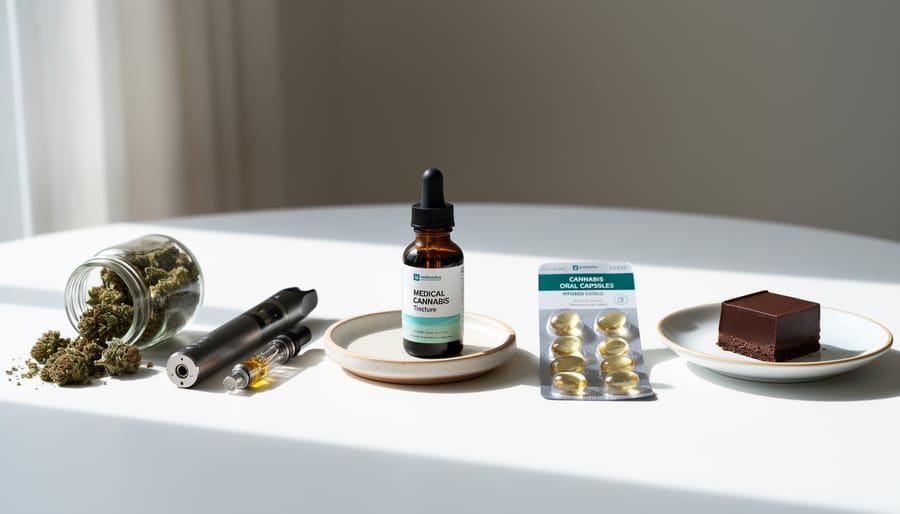
The method you choose to consume medical cannabis fundamentally shapes how you should apply the optimal consumption rule. Each delivery system interacts with your body differently, affecting when effects begin, how long they last, and how consistently they work from one use to the next.
Inhalation methods, whether through vaporization or smoking, offer the fastest onset, typically within minutes, which allows patients to assess effects quickly and adjust accordingly. This rapid feedback makes it easier to find your threshold in a shorter timeframe, though the shorter duration means you may need to consume more frequently throughout the day. The start-low-go-slow approach with inhalation means taking a single inhalation, waiting several minutes to gauge the response, then deciding whether another is needed.
Oral consumption through edibles and capsules presents a different challenge. Effects may not appear for an hour or more, and they can last significantly longer once they do. This delayed onset requires patience; many patients make the mistake of consuming more before the initial dose has taken effect. With edibles, applying the optimal consumption rule means waiting at least two hours before considering additional intake, even when you feel nothing initially. Understanding what to eat with edibles can also influence absorption timing and intensity, adding another variable to monitor.
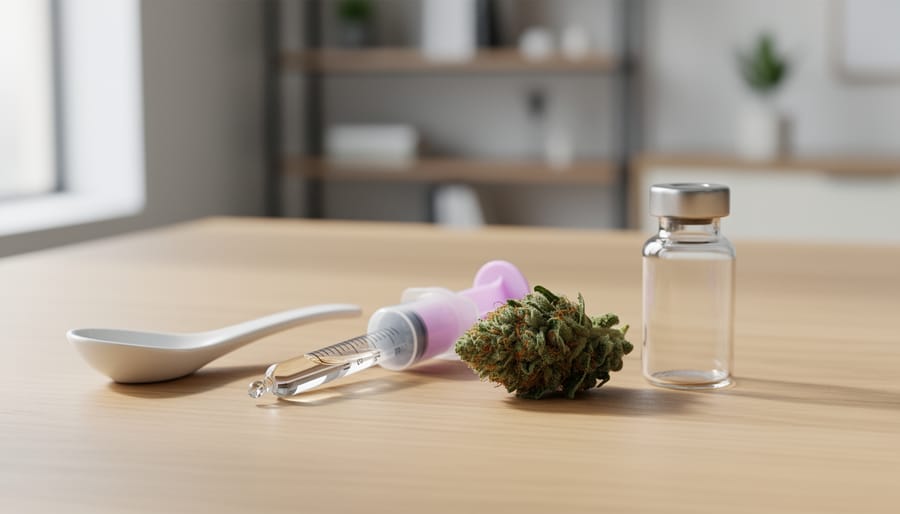
Oils and tinctures taken orally fall somewhere between inhalation and solid edibles in terms of onset, typically beginning to work within 30 to 90 minutes. Their advantage lies in easier dose measurement and adjustment, allowing for smaller incremental changes as you refine your optimal amount.
Sublingual products, held under the tongue, bypass much of the digestive system and generally produce effects faster than swallowed oils, often within 15 to 30 minutes. This middle-ground timing provides more feedback than edibles but less immediacy than inhalation.
Topical applications work entirely differently, producing localized effects without the psychoactive response associated with other methods. Here, optimal use focuses on coverage area and frequency rather than systemic dosing considerations.
The consumption method you select should align with your therapeutic goals, lifestyle, and comfort level with each approach’s unique timing profile. Your healthcare provider can help you understand which method best supports applying the optimal consumption rule for your specific medical needs.
Applications in Canadian Medical Cannabis Practice
In Canadian medical cannabis practice, healthcare providers apply the optimal consumption rule across diverse therapeutic contexts, tailoring guidance to each patient’s condition and response patterns. The principle of individualized titration proves particularly valuable in chronic pain management, where patients work with their care teams to identify the minimum effective approach that reduces discomfort without compromising daily function. Rather than prescribing fixed regimens, providers encourage patients to track symptom relief and adjust gradually based on observed outcomes.
For sleep disorders, the rule helps patients navigate timing and method selection. Those using oils or capsules learn to anticipate delayed onset and adjust their evening routine accordingly, while inhalation users may find faster-acting relief with different titration considerations. Anxiety management similarly benefits from this patient-centered approach, as individuals discover their response thresholds through careful monitoring and incremental changes under professional supervision.
Nausea control, especially in oncology settings, demonstrates the rule’s flexibility. Patients undergoing chemotherapy often need to pair snacks with cannabis consumption strategies, coordinating intake with meal timing and treatment schedules. Healthcare providers guide these patients in finding what works within their specific treatment context.
Licensed producers in Canada contribute to this framework through patient education programs, offering consumption guides and dosing journals that support informed self-monitoring. Pharmacists with cannabinoid therapy training play a crucial role in translating the optimal consumption principle into practical advice, helping patients understand product labels, anticipate effects based on their chosen method, and recognize when adjustments warrant medical consultation.
Dr. Mark Ware, a McGill University researcher and clinician, has championed evidence-informed approaches to medical cannabis that emphasize patient autonomy within clinical oversight, a philosophy that aligns closely with optimal consumption principles now adopted across Canadian cannabis clinics.
Common Questions About Optimal Cannabis Consumption
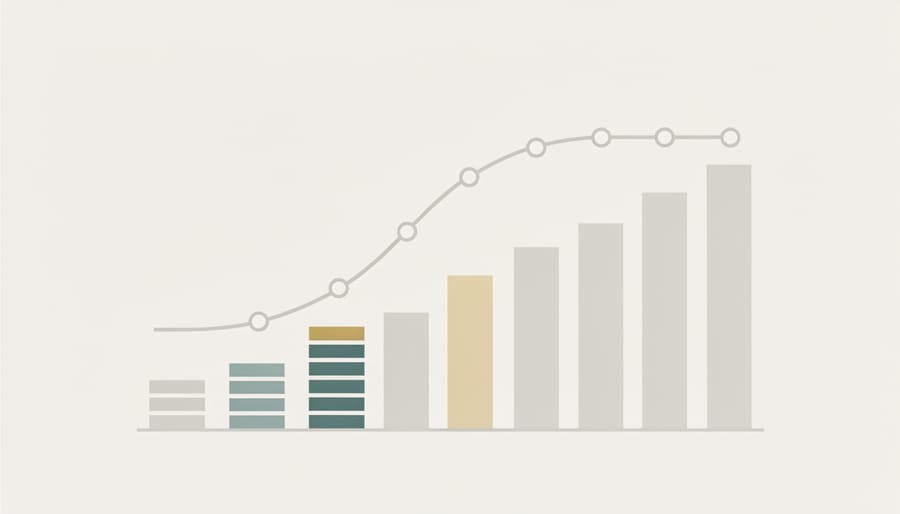
Patients applying the optimal consumption rule often encounter similar questions as they work to find their effective dose. Understanding that responses vary widely from person to person helps set realistic expectations for the adjustment process.
How do I know when I’ve found my optimal dose?
You’ve likely reached your optimal dose when you experience the therapeutic benefit you’re seeking without unwanted effects, and this effect remains consistent across multiple uses. Keep a journal tracking your response to help identify this point.
Can my optimal consumption change over time?
Yes, your needs may shift due to tolerance development, changes in your medical condition, stress levels, or other medications. Regular reassessment with your healthcare provider ensures your approach remains effective.
What should I do if I experience unwanted effects?
Stop consuming immediately, stay calm, and hydrate. Most unwanted effects from cannabis diminish within a few hours, though the timeline varies by consumption method. Contact your healthcare provider if effects persist or cause significant concern.
Should I consult a healthcare provider about my consumption?
Absolutely. A healthcare provider familiar with cannabis therapeutics can guide your titration process, monitor for interactions with other medications, and adjust your approach based on your specific health profile and goals.
The relationship between tolerance and optimal consumption deserves particular attention. Some patients worry that needing more product over time means the treatment isn’t working, but tolerance is a normal physiological response that doesn’t necessarily require constantly increasing amounts. Taking periodic breaks, adjusting consumption timing, or switching between products with different cannabinoid profiles can help maintain effectiveness. Your healthcare provider can suggest strategies that align with your therapeutic goals while keeping consumption at reasonable levels.
Individual variability shapes every aspect of optimal consumption. Factors like body weight, metabolism, digestive health, stress, sleep quality, whether you manage symptoms with food and even genetics influence how you respond to cannabis. What works perfectly for another patient may not suit your needs, which is why cookie-cutter approaches fall short. The optimal consumption rule acknowledges this complexity by centering the process on your unique response rather than arbitrary standards.
The optimal consumption rule represents a patient-centered framework that prioritizes safety, efficacy, and individual response over one-size-fits-all recommendations. By emphasizing gradual titration, careful observation, and personalized adjustments under medical supervision, this approach empowers Canadian patients to find their minimum effective dose across different consumption methods, whether they choose inhalation for rapid onset, oral products for sustained relief, or topicals for localized application.
What works optimally for one patient may differ significantly for another based on factors including medical condition, body chemistry, tolerance, and therapeutic goals. This variability makes healthcare provider guidance essential, not optional. Licensed producers and medical professionals across Canada increasingly support this individualized approach, recognizing that patient empowerment flourishes best within a supervised framework.
For Canadian patients beginning their medical cannabis journey or refining their current approach, applying the optimal consumption rule means committing to patience, documentation, and open communication with healthcare providers. Consider exploring routine tips for patients to support your personalized treatment plan. The path to optimal consumption is rarely linear, but with careful attention and professional support, most patients can identify an approach that delivers meaningful therapeutic benefit while minimizing unwanted effects.