
Canada Vape Laws: What You Need to Know About Federal and Provincial Regulations in 2026
Canada regulates vaping products through federal legislation that sets baseline standards for all provinces and territories, establishing an 18-year minimum purchase age, nicotine concentration limits of 20 mg/mL, advertising restrictions, and bans on use wherever smoking is prohibited. The Tobacco and Vaping Products Act governs both nicotine e-cigarettes and cannabis vaping devices, though each category faces additional specific requirements under separate federal frameworks.
If you’re trying to understand what’s legal across Canada in 2026, you need to know that eight provinces have layered their own e-cigarette legislation on top of federal rules, creating a patchwork of regulations that vary by location. The federal government controls product standards, manufacturing requirements, and cross-border sales through Health Canada, while provinces set retail licensing, point-of-sale restrictions, and enforcement mechanisms within their jurisdictions.
The relationship between vaping and lungs has shaped policy development, particularly as researchers and healthcare providers continue studying long-term health outcomes. For medical cannabis patients, understanding these regulatory layers matters because vaping devices marketed for dried cannabis or concentrates must comply with both the Cannabis Act and vaping product regulations simultaneously.
This guide breaks down federal requirements that apply nationwide, explains how provincial rules differ, and clarifies the distinct regulatory paths for nicotine vaping products versus cannabis vaping devices. Whether you’re a healthcare provider advising patients, a retailer navigating compliance obligations, or someone simply wanting to know where and how you can legally purchase and use vaping products, the framework below provides the clarity Canada’s dual regulatory system often obscures.
Understanding Canada’s Vaping Regulatory Framework
Canada’s vaping regulatory landscape operates under two distinct federal frameworks that sometimes overlap but serve different purposes. The Tobacco and Vaping Products Act governs all vaping devices and nicotine-containing e-liquids, establishing nationwide standards for manufacturing, sales, advertising, and use. This legislation treats vaping products as a separate category from traditional tobacco, recognizing both their potential as smoking cessation tools and their risks, particularly for youth.
Cannabis vaping products face a more complex regulatory environment. They fall under both the Cannabis Act (which controls all cannabis products in Canada) and elements of the Tobacco and Vaping Products Act (which regulates vaping devices and certain product standards). This dual framework means cannabis vape cartridges and oils must comply with cannabis-specific rules around THC limits, packaging, retail channels, and provincial distribution systems, while the devices themselves and certain manufacturing standards align with general vaping regulations.
The practical distinction matters for consumers. Nicotine vaping products can be sold through specialty vape shops, convenience stores, and other retailers licensed to sell tobacco products, subject to provincial rules. Cannabis vaping products, however, must be purchased exclusively through legal cannabis retail channels, provincial stores or licensed private retailers, depending on your province. This separation reflects different policy objectives: vaping regulations aim to reduce smoking harms while preventing youth uptake, whereas cannabis regulations focus on eliminating the illegal market and controlling access to psychoactive substances.
Both frameworks share common ground on age restrictions and public use limitations, but their enforcement mechanisms and retail compliance requirements differ significantly. The federal government sets baseline standards for all vaping products, but as we’ll explore, provinces layer additional rules that can vary considerably depending on where you live.
Federal Vaping Laws That Apply Across Canada
Age Restrictions and Purchase Requirements
Under federal law, anyone purchasing or possessing vaping products in Canada must be at least 18 years old. The minimum age is 18 applies to both nicotine e-cigarettes and cannabis vaping products under the Tobacco and Vaping Products Act and related legislation.
However, this federal baseline is just the starting point. Provinces and territories have the authority to set stricter age requirements, and many do. Several jurisdictions have raised their minimum purchase age to 19 or higher to better align with provincial tobacco and cannabis policies. Before buying vaping products, check your specific province’s rules, as selling to someone below the provincial age limit is illegal regardless of federal law.
Retailers must verify age at the point of sale. This applies whether you’re buying in person at a vape shop, cannabis retailer, or convenience store, or ordering online. Valid government-issued identification is required for anyone who appears underage. These purchase restrictions exist for all vaping products, whether they contain nicotine, cannabis, or no active substance at all.
Where You Can and Cannot Vape
Under federal law, vaping is banned where smoking is prohibited. This means you cannot vape in federally regulated workplaces, on domestic flights, or in areas designated as smoke-free under the Non-smokers’ Health Act. The same restrictions apply whether you’re using a nicotine e-cigarette or a cannabis vaping device.
The federal framework treats vaping and smoking identically in terms of where use is restricted. If you can’t light a cigarette somewhere, you can’t use a vape there either. This includes government buildings, air and rail transportation, and other federally controlled spaces.
Provincial and territorial governments layer additional restrictions on top of these federal rules. Many jurisdictions extend vaping bans to indoor public spaces, restaurant patios, near building entrances, and areas where children gather such as playgrounds and school grounds. Some provinces prohibit vaping in vehicles carrying minors.
Retailers also face location-based restrictions. Sales are banned in the same places where vaping use is prohibited, meaning you won’t find vaping products sold on planes, trains, or in federally controlled buildings.
Advertising and Promotion Rules
Federal law tightly restricts how vaping products can be promoted in Canada. The Tobacco and Vaping Products Act bans most lifestyle and brand advertising that could appeal to young people, meaning manufacturers can’t run television commercials, sponsor events, or use celebrity endorsements to market their products. Advertising is generally limited to factual, informational messages rather than imagery that glamorizes vaping.
The Vaping Products Promotion Regulations establish specific point-of-sale promotion rules that allow retailers some flexibility while protecting youth. Stores can display vaping products and provide price information at the point of sale, but these promotions can’t be visible from outside the store if minors are allowed inside. This means adult-only vape shops have more leeway with in-store displays than general retailers accessible to youth.
Testimonials, endorsements, and depictions of people using vaping products are prohibited across all advertising channels. Online retailers face the same restrictions, and any permitted advertising must include health warnings. These rules apply to both nicotine and cannabis vaping products, though cannabis faces additional marketing constraints under separate cannabis legislation.
Manufacturing and Sales Standards
The Tobacco and Vaping Products Act establishes comprehensive manufacturing and sales standards that apply to all vaping products sold in Canada. Any manufacturer or importer must comply with these federal requirements before bringing vaping products to market, ensuring consistency in quality and safety across the country.
All vaping products must carry specific labelling that meets federal standards. This includes health warnings, nicotine content statements, and ingredient lists presented in a clear, standardized format. Manufacturers cannot make health claims about vaping products, and all packaging must display required warnings about nicotine’s addictive nature.
The most significant manufacturing standard is the Nicotine Concentration in Vaping Products Regulations, which cap nicotine content at a maximum 20 mg/mL nicotine concentration for any vaping product manufactured or imported for sale in Canada. This limit applies regardless of the product format, whether it is e-liquid bottles, pre-filled pods, or disposable devices. Products exceeding this threshold cannot legally enter the Canadian market.
Retailers must verify that products meet these standards before offering them for sale. The act prohibits selling vaping products that lack proper labelling or exceed nicotine limits, placing responsibility on both manufacturers and sellers to ensure compliance. This regulatory framework aims to protect consumers from excessive nicotine exposure while maintaining product consistency across the national market.
Provincial and Territorial Variations in Vaping Laws
While federal law sets the baseline for vaping regulations in Canada, provinces and territories have exercised their authority to implement additional restrictions that often go beyond the federal framework. This layered approach means the rules governing where you can vape, who can sell vaping products, and even the minimum purchase age can vary significantly depending on where you live in Canada.
The federal government and eight provinces have adopted e-cigarette legislation, creating a patchwork of regulations across Canada that vapers and retailers must navigate. Most provinces have set minimum age requirements at 19, exceeding the federal minimum of 18. Retail restrictions also differ: some jurisdictions allow vaping product sales only in age-restricted stores, while others permit sales in convenience stores with certain conditions. Public use rules vary as well, with some provinces banning vaping in all places where smoking is prohibited, and others adding restrictions in outdoor spaces near schools, playgrounds, and sports facilities.
| Province/Territory | Minimum Age | Key Retail Restriction | Notable Public Use Rule |
|---|---|---|---|
| Ontario | 19 | Sales restricted to specialty vape shops and age-restricted retailers | Banned where smoking is prohibited plus additional outdoor spaces |
| British Columbia | 19 | Must be sold from enclosed areas with restricted access | Prohibited on school property and within specified distances |
| Alberta | 18 | Age verification required at point of sale | Banned in enclosed public spaces and workplaces |
| Quebec | 18 | Product display restrictions apply | Prohibited where smoking is banned under provincial law |
Understanding these provincial differences matters whether you’re using vaping products containing nicotine or cannabis. For those using cannabis vaping products specifically, knowing how cannabinoids work in vaporized form can inform your approach to optimal consumption within your province’s legal framework. The variation in provincial rules reflects different public health priorities and political approaches to harm reduction, meaning compliance requires checking the specific regulations in your jurisdiction rather than assuming federal rules tell the whole story.
Cannabis Vaping: How the Rules Differ
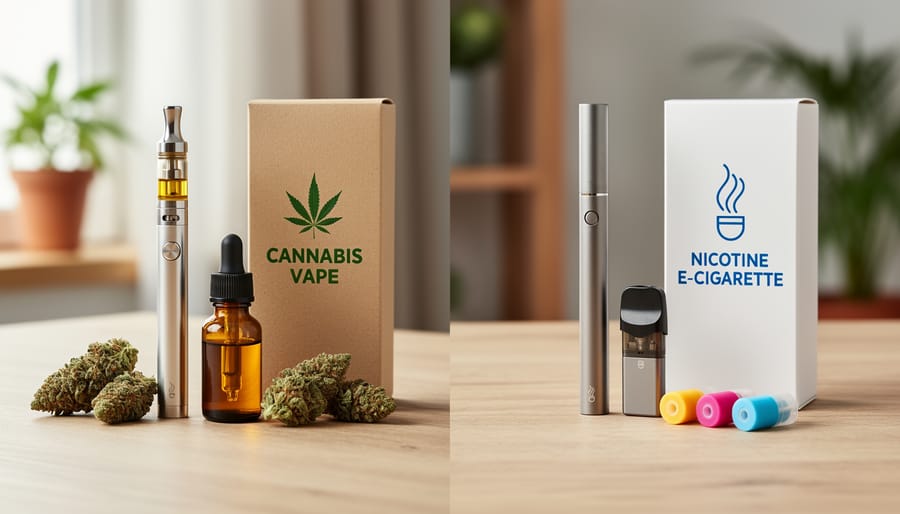
Cannabis vaping products occupy a unique regulatory space in Canada, governed by both the Cannabis Act and vaping product legislation. Understanding this dual framework matters whether you’re a medical cannabis patient or recreational user, as the rules differ substantially from nicotine vaping products.
At the federal level, cannabis vaping products must comply with both cannabis-specific regulations, including THC concentration limits, child-resistant packaging requirements, and plain packaging rules, and general vaping product standards. Provincial cannabis retailers can legally sell these products, but traditional vape shops cannot, creating a distinct retail channel that separates cannabis vaping from nicotine e-cigarettes.
Possession limits follow cannabis rules rather than vaping product regulations. Adults can possess up to 30 grams of dried cannabis equivalent in public, with one milliliter of cannabis oil counting as one gram of dried cannabis. These limits apply whether you’re carrying flower, edibles, or vape cartridges, though the calculation method differs by product form.
Where you can use cannabis vaping products is typically more restrictive than nicotine vaping. Most provinces prohibit cannabis consumption, including vaping, in public spaces where smoking is banned, plus additional locations. Ontario, for example, prohibits cannabis use in vehicles, workplaces, and areas where youth congregate. British Columbia extends these restrictions to public parks and beaches, while Quebec limits use primarily to private residences.
Provincial differences extend to retail access and product availability. Some provinces operate government-run cannabis retail systems that strictly control vaping product selection, while others permit private retailers with varying degrees of product diversity. Alberta’s private retail model offers broader cannabis vape options than the government-operated systems in Quebec or some Atlantic provinces.
The health risks associated with cannabis vaping have prompted additional provincial scrutiny. Several jurisdictions require retailers to provide educational materials about vaping safety, and some have imposed temporary restrictions on flavored cannabis vaping products following public health concerns, though these policies vary and change as research evolves.
Medical cannabis patients face the same provincial cannabis vaping restrictions as recreational users, despite holding Health Canada authorizations. Your medical document does not exempt you from provincial rules about where and how cannabis can be consumed, including through vaping.
What These Laws Mean for Vapers and Retailers
Canada’s vaping regulations create clear expectations for everyone involved in the vaping ecosystem. Whether you’re a consumer purchasing products or a retailer navigating compliance requirements, understanding these rules helps you operate within the law while the regulatory framework works to balance adult access with public health objectives, particularly preventing youth uptake.
For retailers, compliance means strict adherence to federal and provincial standards. You must verify customer age at point of sale (minimum 18 federally, potentially higher provincially), maintain proper product labelling that meets federal standards, and ensure your inventory respects the 20 mg/mL nicotine concentration limit. Cannabis vaping products require sale through licensed cannabis retailers, not general vape shops, creating distinct retail channels. Advertising restrictions under the Vaping Products Promotion Regulations limit how you can market products, confining most promotions to point-of-sale displays with specific requirements. Provincial variations add another compliance layer, what’s permissible in one jurisdiction may be prohibited in another, so retailers operating across provinces need location-specific protocols.
Consumers face simpler but equally important considerations:
- Purchase only from licensed retailers appropriate to the product type (vape shops for nicotine, cannabis stores for THC products)
- Respect provincial age minimums and public use restrictions that vary by location
- Understand that vaping is prohibited wherever smoking is banned under federal rules
- Check provincial regulations when traveling within Canada, as rules differ significantly
- Verify product compliance with federal concentration limits and labelling standards
The regulatory rationale centers on harm reduction and youth prevention. By establishing manufacturing standards, restricting promotion, and limiting where vaping occurs, governments aim to provide adult smokers with less harmful alternatives while preventing a new generation from developing nicotine dependence. Cannabis vaping regulations follow similar logic, ensuring products meet safety standards and reach consumers through controlled channels. Just as some people pair with routines that support their wellness goals, understanding these laws helps you integrate vaping legally and responsibly into your lifestyle while respecting the broader public health framework.
Frequently Asked Questions About Vaping Laws in Canada
Can I travel between provinces with my vaping products?
Yes, you can travel across provincial borders with vaping products for personal use. However, be aware that the province you enter may have stricter rules than your home province regarding where you can vape, minimum purchase age (some provinces set it higher than the federal minimum of 18), and retail restrictions. Cannabis vaping products follow the same interprovincial rules as other cannabis products.
Is it legal to buy vaping products online in Canada?
Online sales of vaping products are legal under federal law, but provincial regulations vary. Some provinces restrict or prohibit online sales of nicotine vaping products, while others allow them with age verification requirements. Cannabis vaping products must be purchased through legal provincial cannabis retailers, which may include authorized online stores in some jurisdictions.
Can I import vaping products from other countries?
Importing vaping products for personal use is subject to federal regulations, including the 20 mg/mL maximum nicotine concentration limit for e-liquids. Products exceeding this limit cannot be legally imported. Commercial imports must comply with all federal manufacturing and labelling standards under the Tobacco and Vaping Products Act.
How are vaping laws enforced in Canada?
Enforcement falls to both federal and provincial authorities. Health Canada oversees federal compliance with manufacturing, labelling, and advertising rules. Provincial regulators handle retail compliance, age restrictions, and public use violations. Penalties vary by jurisdiction but can include fines for retailers selling to minors or operating without proper licensing.
Understanding these practical aspects of Canada’s vaping laws helps you stay compliant whether you’re a consumer or retailer. The dual federal-provincial framework means you need to know both sets of rules, what applies nationwide and what varies in your specific province. Cannabis vaping adds another layer since those products sit under both cannabis regulations and vaping product rules.
If your situation involves cross-border travel or online purchases, check your destination province’s specific rules before you go. Provincial health ministry websites typically maintain current information about local vaping restrictions. For cannabis vaping specifically, your provincial cannabis authority will have the most accurate details about legal purchase channels and possession limits.
Canada’s vaping landscape in 2026 operates under a dual regulatory system that governs both nicotine e-cigarettes and cannabis vaping products. Federal laws set the baseline, establishing an 18-year minimum purchase age, capping nicotine concentration at 20 mg/mL, restricting advertising, and banning vaping where smoking is prohibited. Eight provinces have layered additional rules on top of these federal standards, creating variations in age limits, retail access, and public use restrictions that depend on where you live.
If you vape cannabis products, you navigate an even more complex framework. Provincial cannabis vaping laws add possession limits and designated retail channels to the mix, meaning a cannabis vape pen faces different rules than a nicotine device. Whether you’re a consumer or retailer, understanding both the federal foundation and your province’s specific requirements isn’t optional, it’s essential for staying compliant.
Regulations evolve as public health priorities shift and new research emerges. Check your provincial government website regularly for updates, and rely on resources like Canadian Medical Freedom to track cannabis-related legislative changes that affect medical patients and recreational users alike.