What Are Cannabinoids? A Plain-Language Guide to How They Work
Cannabinoids are a diverse group of chemical compounds that interact with the body’s endocannabinoid system to influence functions ranging from pain perception and mood to appetite and immune response. Found naturally in cannabis plants and produced within the human body itself, these molecules have become central to understanding how medical cannabis works and why different products produce distinct therapeutic effects.
For anyone exploring medical cannabis in Canada, grasping the basics of cannabinoids is essential. The difference between CBD and THC, the role of lesser-known compounds like CBG and CBN, and how these substances work together shapes everything from strain selection to dosing strategies. Yet despite growing mainstream acceptance, confusion persists about which cannabinoids matter for specific health conditions, how they interact with prescription medications, and what the latest Canadian research reveals about their medical applications.
This guide cuts through the complexity with a clear explanation of what cannabinoids are, how the endocannabinoid system functions, and which compounds show the most promise for therapeutic use. We’ll profile the major cannabinoids backed by clinical evidence, examine how they work individually and in combination, and translate this science into practical guidance for Canadian patients navigating medical cannabis access.
Whether you’re a healthcare provider seeking to advise patients, a newly authorized medical cannabis user trying to make informed choices, or simply curious about the science behind cannabis therapeutics, understanding cannabinoids provides the foundation for every decision that follows. The landscape has evolved dramatically since legalization, with higher-quality research, standardized products, and clearer regulatory frameworks making evidence-based cannabis medicine more accessible than ever before.
What Cannabinoids Are and Where They Come From
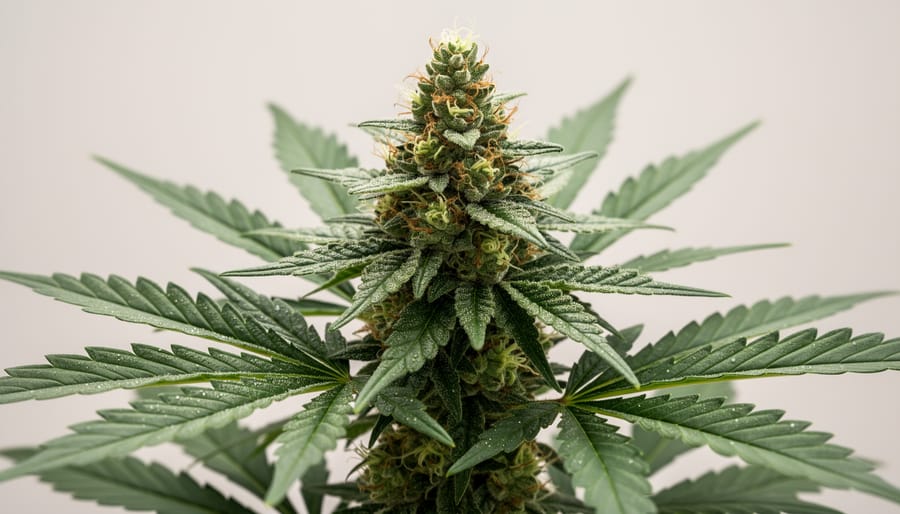
Cannabinoids are naturally occurring or lab-made chemical compounds that interact with specialized receptors in your body to produce a wide range of effects. Think of them as messenger molecules that plug into specific sites in your cells, triggering responses that can influence pain perception, mood, appetite, inflammation, and dozens of other bodily functions. While cannabis plants contain the most famous cannabinoids, your own body produces similar compounds every day to help maintain internal balance.
Understanding where cannabinoids come from helps you make sense of medical cannabis products and how they work. These molecules fall into three main categories based on their origin:
- Phytocannabinoids
- Plant-derived cannabinoids produced in the resin glands of cannabis plants, including THC and CBD. These are the compounds you’ll find in medical cannabis products available through Health Canada-authorized channels.
- Endocannabinoids
- Cannabinoid-like molecules your body manufactures on demand to regulate functions like sleep, immune response, and stress. The two main ones are anandamide and 2-AG, which work similarly to plant cannabinoids but get broken down quickly after use.
- Synthetic cannabinoids
- Lab-created compounds designed to mimic natural cannabinoids, sometimes used in research or pharmaceutical drugs like nabilone (approved in Canada for chemotherapy-related nausea). These are distinct from the dangerous “synthetic marijuana” products sold illegally.
- Hemp
- A variety of cannabis plant bred for low THC content (under 0.3% in Canada) and typically used for CBD extraction, fibre, and seeds. Hemp-derived CBD products fall under different regulations than medical cannabis.
Phytocannabinoids matter most to medical cannabis patients because they’re the active ingredients in your prescribed products. The cannabis plant produces over 100 different cannabinoids, though most exist in trace amounts. THC and CBD dominate the conversation because they appear in the highest concentrations and have the most research behind them, but emerging cannabinoids like CBG and CBN are gaining attention as scientists learn more about their distinct properties.
Why does this matter for your health decisions? Knowing that cannabinoids come from different sources helps you understand product labels, follow dose guidance from your healthcare provider, and distinguish between regulated medical cannabis (phytocannabinoids from licensed producers) and unregulated products. It also explains why your body responds to cannabis at all: you already have an internal system designed to work with these molecules, which is why plant cannabinoids can produce therapeutic effects in the first place.
How Cannabinoids Work in Your Body
The Endocannabinoid System Explained
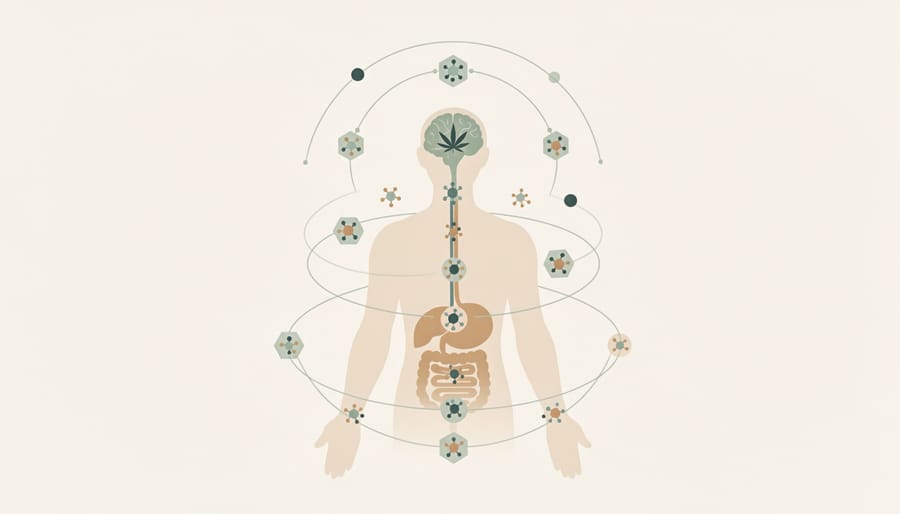
The endocannabinoid system is a complex cell-signalling network that exists in all mammals, including humans. Discovered in the early 1990s by researchers studying THC, the ECS operates throughout your brain, organs, connective tissues, glands, and immune cells. Its primary job is maintaining homeostasis, keeping your body’s internal environment stable despite external changes.
Think of the ECS as your body’s master regulator. When something tips out of balance, whether that’s inflammation, pain signals, mood, appetite, or sleep cycles, the ECS kicks in to restore equilibrium. It does this through endocannabinoids (naturally produced molecules similar to plant cannabinoids), receptors that these molecules bind to, and enzymes that break them down once their job is done.
This system affects nearly every physiological process: immune response, memory formation, pain perception, temperature regulation, and even bone density. Unlike most bodily systems that handle one specific function, the ECS acts as a bridge between different systems, helping them communicate and coordinate.
For medical cannabis patients, understanding the ECS explains why cannabinoids can affect so many different conditions. When you consume cannabis, plant cannabinoids interact with this existing system, either mimicking your body’s natural endocannabinoids or influencing how they work. THC and CBD don’t create new functions; they modulate processes your body already manages through the ECS. This is why the same cannabinoid might help with both chronic pain and sleep disorders, or why different people experience different effects from identical products.
Receptor Binding and Effects
When a cannabinoid enters your body, it seeks out specific receptor sites like a key finding its lock. CB1 and CB2 receptors act as these locks, and different cannabinoids fit them in different ways.
CB1 receptors cluster heavily in your brain and central nervous system. They’re particularly dense in areas controlling memory, coordination, pain perception, and mood. When THC binds to CB1 receptors, it triggers the psychoactive effects cannabis is known for, the “high” sensation, altered time perception, and appetite stimulation. This same binding mechanism also explains THC’s pain-relieving properties: by activating CB1 receptors in pain-processing regions, it can interrupt pain signals before they register as discomfort.
CB2 receptors live primarily outside your nervous system, concentrated in immune cells, organs, and peripheral tissues. CBD interacts more readily with CB2 receptors, producing anti-inflammatory effects without psychoactivity. When cannabinoids activate CB2 receptors, they can modulate immune responses and reduce inflammation throughout the body.
The binding itself matters enormously. THC directly activates receptors, creating strong effects. CBD acts more subtly, it may block receptors, prevent other compounds from binding, or influence how your body produces its own endocannabinoids. Some cannabinoids are partial agonists, meaning they activate receptors but produce weaker effects than full agonists like THC.
This explains why cannabinoid profiles produce such varied outcomes. A high-THC product activates CB1 receptors strongly for pain relief and psychoactivity, while a CBD-dominant product modulates CB2 receptors for inflammation control without intoxication.
Major Types of Cannabinoids You Should Know
THC (Tetrahydrocannabinol)
THC is the cannabinoid most people think of when they hear “cannabis.” It binds strongly to CB1 receptors in your brain and central nervous system, producing the characteristic high alongside therapeutic effects. In Canadian medical cannabis, THC products are prescribed for conditions like chronic pain, chemotherapy-induced nausea, multiple sclerosis spasticity, and wasting syndrome, where its ability to deliver pain relief and appetite stimulation becomes clinically valuable.
For medical patients, dosing matters. Low doses (2.5-5 mg) may provide symptom relief without significant impairment, while higher doses carry greater psychoactive effects. You’ll notice THC affects coordination, memory, and reaction time, so Canadian regulations prohibit driving or operating machinery while impaired.
Medical access requires authorization from a healthcare practitioner registered with Health Canada’s medical cannabis program. Products range from dried flower to oils, capsules, and edibles, letting you choose delivery methods that match your lifestyle. Some patients pair snacks with cannabis to manage timing and reduce stomach sensitivity.
CBD (Cannabidiol)
CBD stands out as the most widely used non-psychoactive cannabinoid in Canadian medical cannabis. Unlike THC, it doesn’t produce a high, making it appealing for patients who want symptom relief without intoxication.
Research supports CBD’s effectiveness for several conditions. It reduces inflammation throughout the body by interacting primarily with CB2 receptors in immune cells. Many patients report significant anxiety reduction, though optimal dosing varies considerably between individuals. CBD gained international attention when Health Canada approved Epidiolex for treating severe childhood epilepsies, demonstrating its powerful anti-seizure properties in clinical trials.
In Canada’s medical cannabis framework, CBD products are widely available in multiple forms: oils, capsules, topicals, and dried flower. Products containing only CBD (with minimal THC) don’t require special authorization beyond standard medical cannabis access, making them easier to obtain than high-THC options.
CBD interacts with numerous medications by affecting liver enzymes that metabolize drugs. Always inform your healthcare provider about CBD use, particularly if you take blood thinners, seizure medications, or immunosuppressants. Most patients start with low doses (5-10mg) and gradually increase until they find effective relief, as individual response varies significantly.
CBG, CBN, and CBC
Beyond THC and CBD, researchers are turning their attention to minor cannabinoids that appear in smaller concentrations but show promising therapeutic potential.
Cannabigerol (CBG) is often called the “mother cannabinoid” because other cannabinoids start as CBG before the plant converts them during growth. Most cannabis contains less than 1% CBG, though some Canadian licensed producers now cultivate CBG-rich strains. Early research suggests CBG may help with inflammatory bowel disease, glaucoma, and bacterial infections. It doesn’t produce a high, and some users report increased focus and energy.
Cannabinol (CBN) forms when THC ages and breaks down, which is why older cannabis tends to have higher CBN levels. It’s mildly psychoactive but far less so than THC. CBN has gained popularity as a sleep aid, though the scientific evidence for this remains limited. Canadian products marketed for sleep often combine CBN with other cannabinoids and terpenes.
Cannabichromene (CBC) is non-intoxicating and may work synergistically with other cannabinoids to enhance their effects (the “entourage effect”). Research indicates potential anti-inflammatory and pain-relieving properties, plus possible benefits for brain health and mood regulation.
Availability of these minor cannabinoids in Canadian medical products is growing but still limited compared to THC and CBD. Some licensed producers offer specific minor cannabinoid products, while full-spectrum preparations naturally contain small amounts of all three.
How Cannabinoids Are Used in Medical Cannabis

Understanding Product Labels and Cannabinoid Ratios
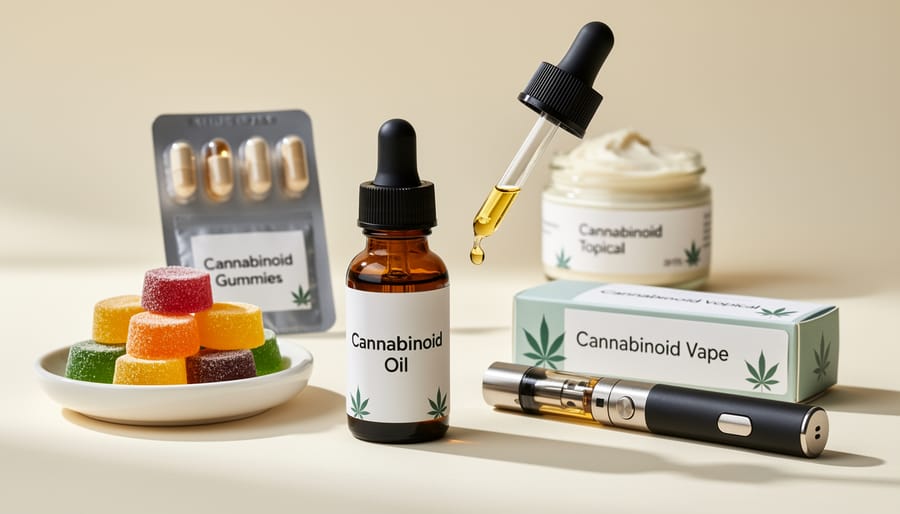
Health Canada requires licensed producers to display cannabinoid content in milligrams per gram (mg/g) and as a percentage on every medical cannabis product label. You’ll typically see two ranges: one for THC and one for CBD, listed as minimum and maximum values because natural variation affects plant chemistry. A label showing “THC: 18-22%” and “CBD: <1%” tells you this is a high-THC, low-CBD product likely to produce stronger psychoactive effects.
Cannabinoid ratios describe the relationship between THC and CBD in shorthand. A 1:1 ratio means equal parts of each cannabinoid, often around 10 mg THC to 10 mg CBD per dose. A 20:1 ratio indicates twenty parts THC to one part CBD, delivering more psychoactive punch with minimal CBD moderation. High-CBD ratios like 1:20 reverse this, offering therapeutic benefits without significant intoxication. Many patients starting cannabinoid therapy begin with balanced or CBD-dominant ratios, then adjust based on symptom relief and tolerance.
When choosing products, match cannabinoid profiles to your therapeutic goals. Pain and sleep issues often respond to higher THC levels, while anxiety and inflammation may improve with CBD-dominant formulations. Delivery method matters too: if you’re considering inhalation, understand how vaping affects lungs compared to oral oils, which bypass respiratory concerns entirely. Some patients research vaping and lungs before selecting their preferred consumption method. Always check for the Health Canada excise stamp, lot numbers, and packaging dates to confirm product legitimacy and freshness.
Working with Healthcare Providers
Starting cannabinoid therapy in Canada begins with an open conversation with your healthcare provider. Before your appointment, track your symptoms, previous treatments, and specific health goals. Be honest about your experience with cannabis, if any, and ask direct questions: Which cannabinoid profile might help your condition? What starting dose makes sense? How should you monitor effects?
Getting medical authorization requires a registered healthcare practitioner to assess whether cannabis is appropriate for your situation. In Canada, you don’t need a specific diagnosis, but your doctor must believe cannabis may help. Once authorized, you’ll register with a licensed producer who can ship products directly to your home.
Adjusting your cannabinoid profile is a gradual process. Most doctors recommend starting low and going slow, particularly with THC. The optimal consumption rule suggests finding the minimum effective dose rather than maximizing intake. Keep a symptom journal noting cannabinoid ratios, doses, timing, and effects. Share this log with your doctor at follow-ups to refine your treatment plan. If one cannabinoid profile isn’t working after a few weeks, your healthcare provider can adjust ratios or suggest different delivery methods.
Canadian Perspective: Research and Key Voices
Canada has emerged as a global leader in cannabinoid research since federal legalization in 2018. The country’s regulatory framework, combined with robust academic infrastructure and government funding, has created an environment where cannabinoid science flourishes.
Several research centres across Canada are pushing cannabinoid understanding forward. The Centre for Medicinal Cannabis Research at the University of British Columbia investigates how different cannabinoid profiles affect specific conditions, from chronic pain to PTSD. Meanwhile, researchers at McGill University’s Pain Genetics Lab have made significant contributions to understanding how cannabinoids interact with pain pathways in the body.
Dr. Mark Ware, a Montreal-based physician and researcher, has been instrumental in shaping Canadian medical cannabis policy. His clinical trials examining cannabinoids for chronic pain helped establish evidence-based dosing guidelines used across the country. Dr. Danielle Rankin at Dalhousie University has advanced research into cannabinoid applications for women’s health conditions, an area previously underexplored.
Health Canada’s research licensing framework has enabled controlled studies that would be difficult in many other countries. Canadian companies like Aurora Cannabis and Organigram have invested heavily in proprietary cannabinoid research, developing novel extraction methods and targeted cannabinoid formulations for medical patients.
The Canadian Consortium for the Investigation of Cannabinoids, launched in 2020, brings together researchers from multiple institutions to share data and coordinate studies. This collaborative approach has accelerated discoveries about lesser-known cannabinoids like CBG and CBC.
Canada’s eight-year head start on legal cannabis research positions the country to set international standards for cannabinoid medicine. Medical cannabis patients in Canada benefit directly from this research ecosystem through access to evidence-based products and informed healthcare providers.
Common Questions About Cannabinoids
Medical cannabis patients new to cannabinoids often have similar questions. Understanding these fundamentals helps you make informed decisions about your treatment and set realistic expectations.
Can you build tolerance to cannabinoids?
Yes, regular use of THC can lead to tolerance, meaning you may need higher doses over time to achieve the same effects. Taking periodic breaks (tolerance breaks) can help reset your system, and some patients rotate between different cannabinoid ratios to maintain effectiveness.
Do all cannabinoids get you high?
No, only THC produces psychoactive effects. CBD, CBG, CBN, CBC, and most other cannabinoids don’t cause intoxication, though they may have noticeable therapeutic effects like relaxation or pain relief without the mental alteration.
How long do cannabinoids stay in your system?
Detection time varies widely based on frequency of use, metabolism, and testing method. THC can be detected in urine for three to thirty days in regular users, while CBD typically clears faster. For workplace testing concerns, discuss timing with your healthcare provider.
Are cannabinoids safe for long-term use?
Current research suggests CBD and other non-psychoactive cannabinoids have good long-term safety profiles. THC carries some risks with heavy, prolonged use, particularly for developing brains, but many patients use it safely for years under medical supervision. Regular check-ins with your doctor help monitor for any issues.
What’s the difference between hemp and marijuana cannabinoids?
Hemp and marijuana are both cannabis plants, so their cannabinoids are chemically identical. The legal distinction in Canada relates to THC content: hemp contains 0.3% THC or less. A CBD molecule from hemp works exactly the same as CBD from high-THC cannabis.
These answers reflect what researchers currently understand, but cannabinoid science continues to evolve. If you have specific health concerns or conditions, your healthcare provider can offer personalized guidance that accounts for your medical history and current medications. Don’t hesitate to ask questions during your medical cannabis consultations, because understanding how cannabinoids work in your body leads to better outcomes.
Understanding cannabinoids gives you the foundation to make informed decisions about medical cannabis therapy. These chemical compounds, whether THC for pain management, CBD for inflammation, or emerging options like CBG and CBN, work through your body’s endocannabinoid system in ways that are unique to your biology and health needs.
Medical cannabis isn’t one-size-fits-all. The cannabinoid profile that helps one patient manage chronic pain might look completely different from what works for someone dealing with anxiety or sleep issues. That’s why working closely with a healthcare provider who understands cannabinoid medicine matters. They can help you navigate product options, adjust ratios based on your response, and ensure your treatment plan aligns with your specific condition.
Canada continues to lead in cannabinoid research and product development. Stay curious about new findings, read product labels carefully, and recognize that finding the right cannabinoid therapy often requires patience and adjustment.
The basics you’ve learned here, how cannabinoids interact with receptors, what different compounds do, how to read product information, put you in control of your treatment journey. Informed patients get better outcomes.